
JONATHAN KELLY
37 degrees / when the gods have left
BEN STREET_
May 2026
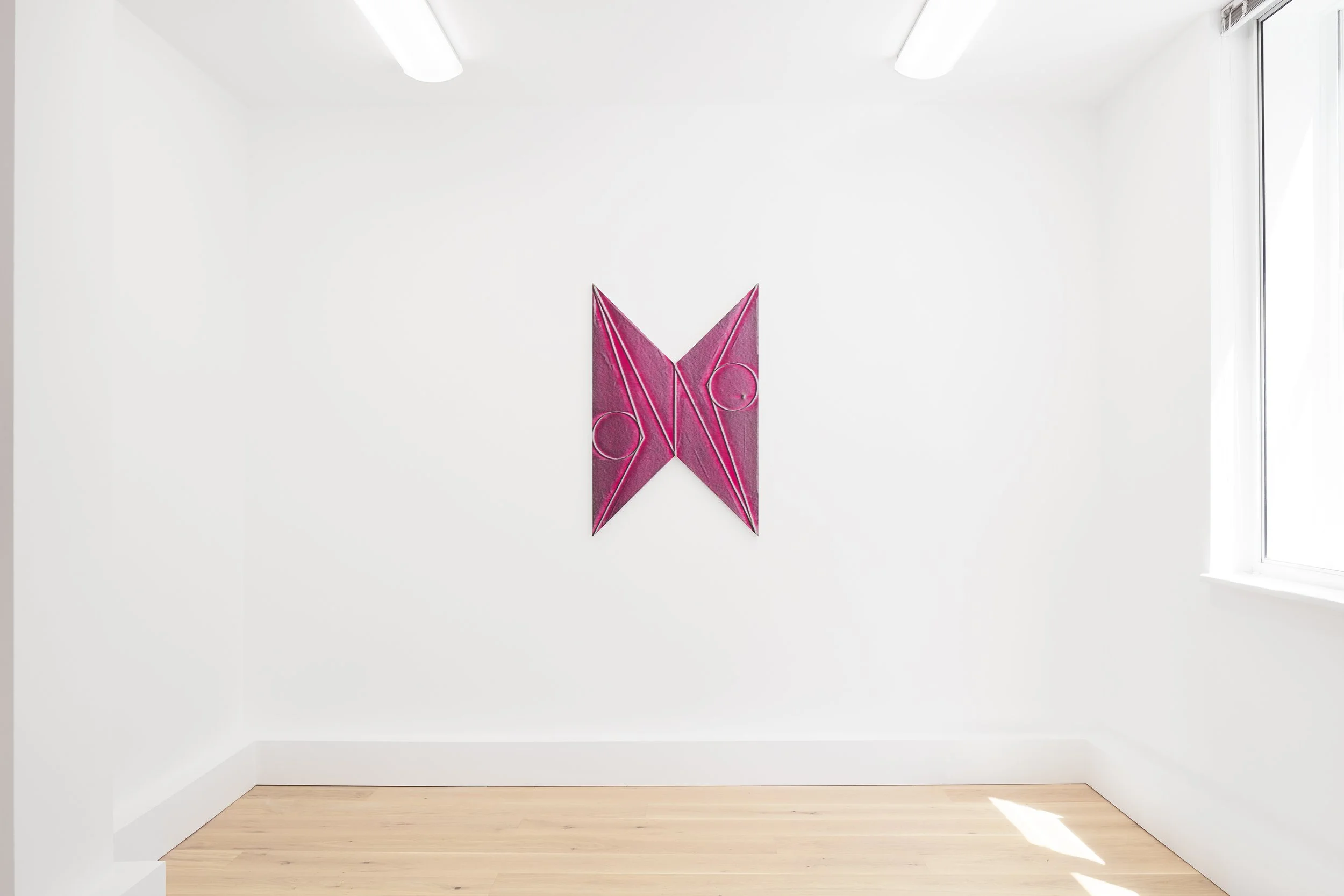
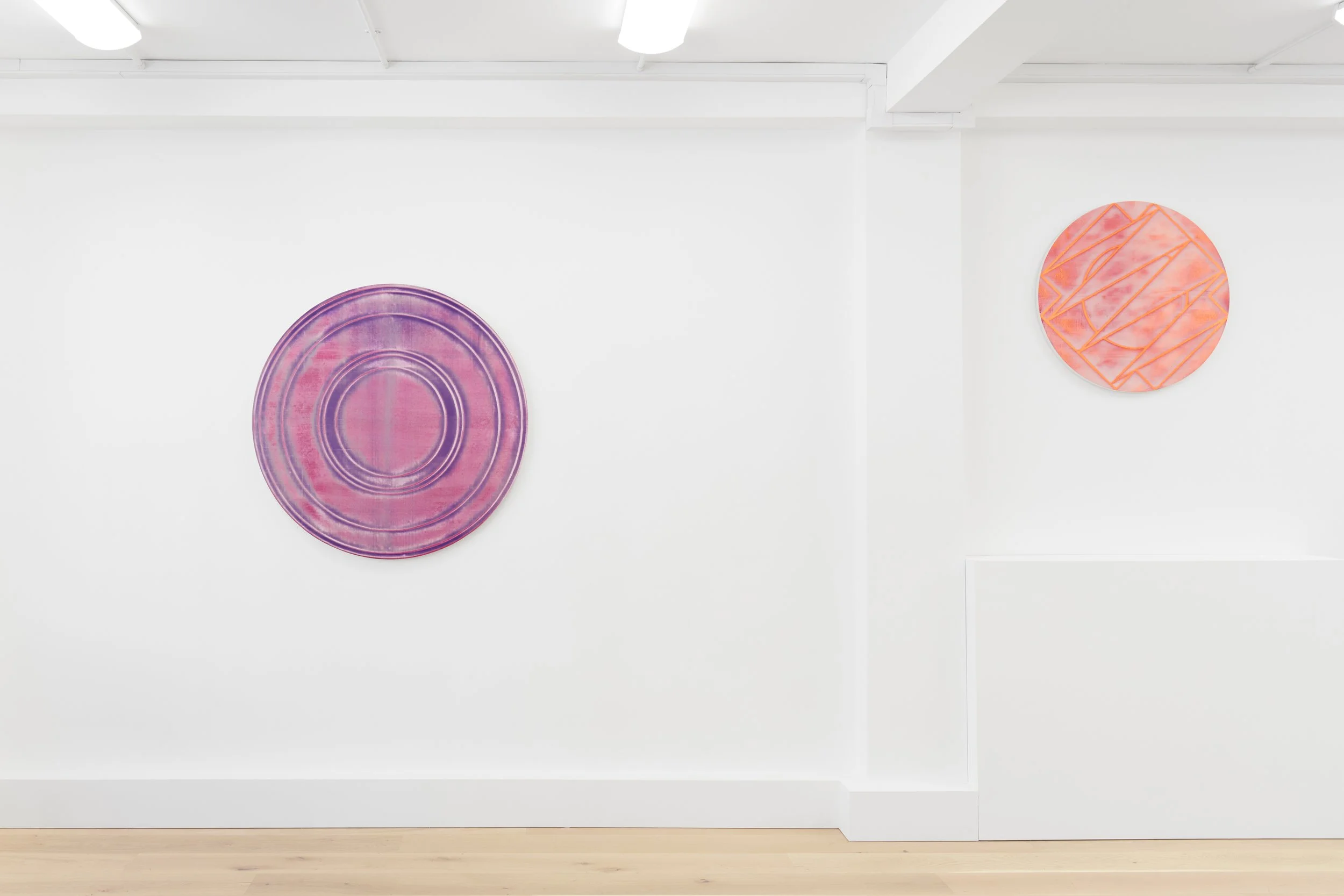
The familiarity of Jonathan Kelly’s paintings is a hard thing to pin down. It’s not because they make any kind of direct allusion to other artists’ works, or that they recall anything, really, in contemporary painting. It’s instead that they resemble transcriptions – prints, impressions, even photocopies – of forms that feel known, but can’t be named. To encounter his work for the first time is to experience an uncanny sensation of recognition: where have I seen this before? (The answer is nowhere). Followed by the inevitable next question: what is it, then, that I’m looking at?
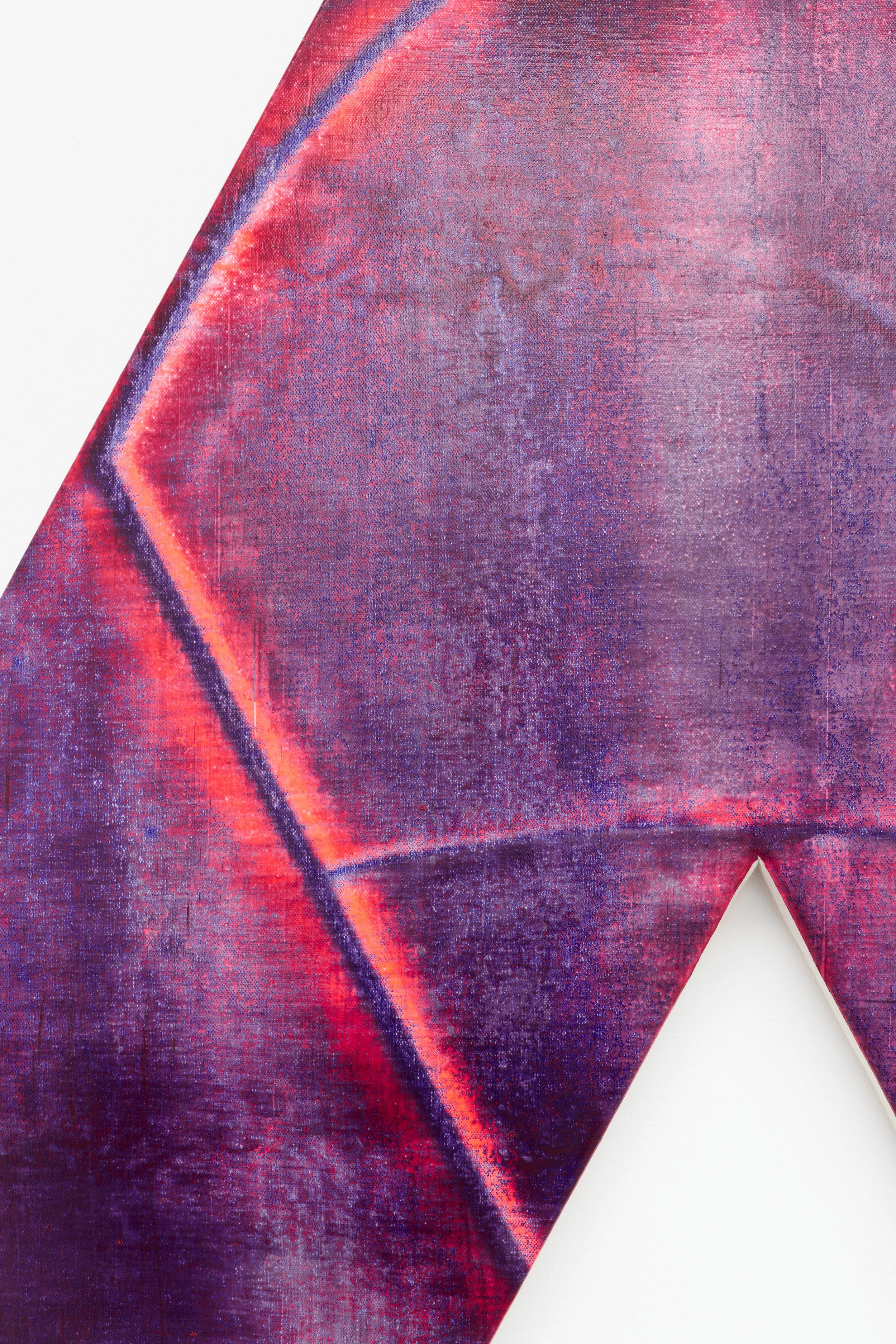
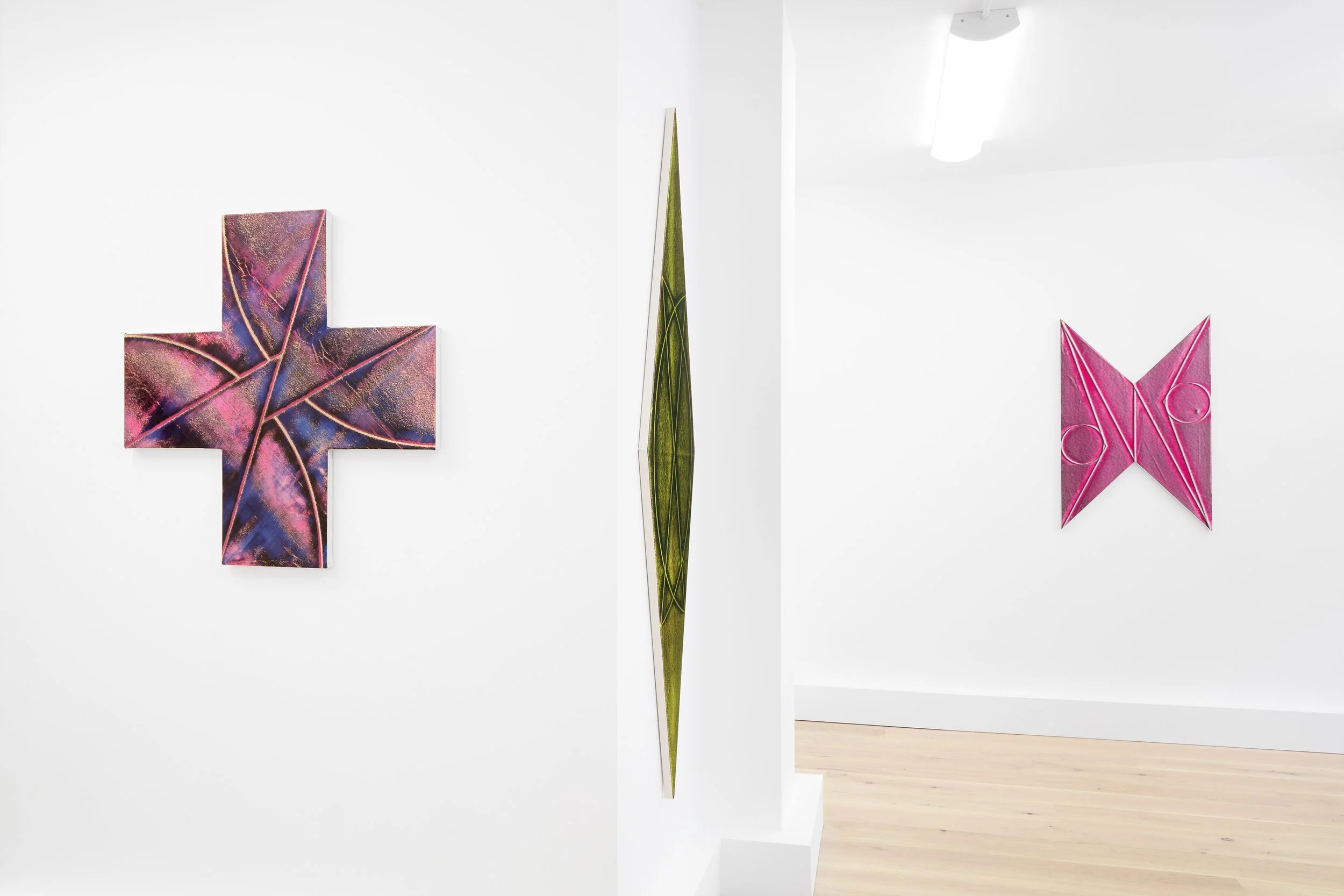
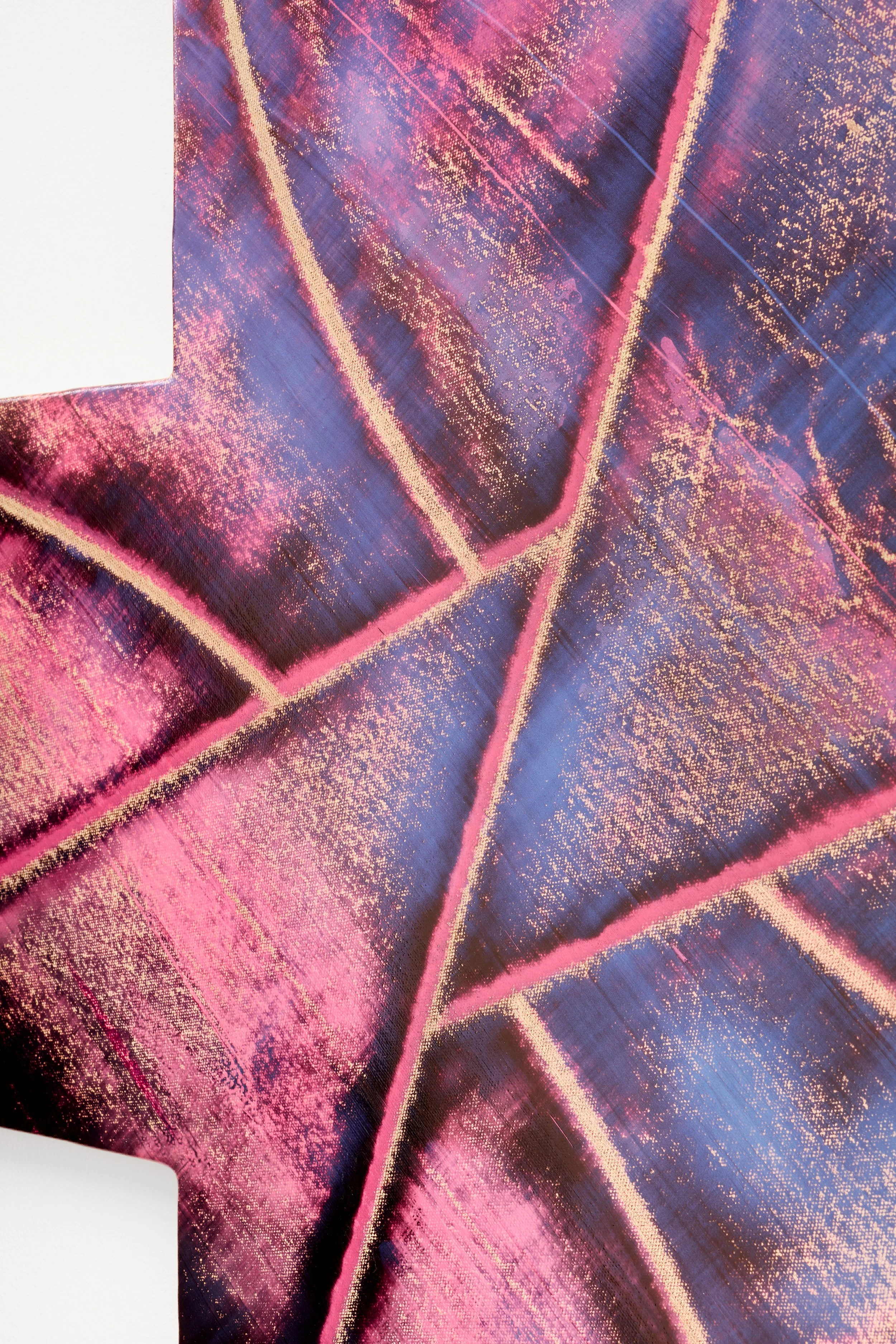
This second question, too, evades an answer. There’s no easy way to unpick the production of these works with any certainty, to run the tape backwards to their point of origin as blank objects. While their surfaces sometimes betray a repertoire of actions – a scuffing and abrasion is at work in many of them – there are also processes and effects that can’t be accounted for, which the artist chooses to keep to himself. What we do know is this. In this new series of works, Kelly begins by creating a shaped canvas that is usually (though not always) based upon X’s and O’s of differing scales and dimensions, or variations on these shapes. The linear patterns that characterise his work emerge out of this initial form. They appear like brass rubbings or blips on a sonar: manifestations of another form, not fully known. They improvise on the given structure, sometimes softening the harshness of its angles, and sometimes reiterating them like an insistent rhythm.
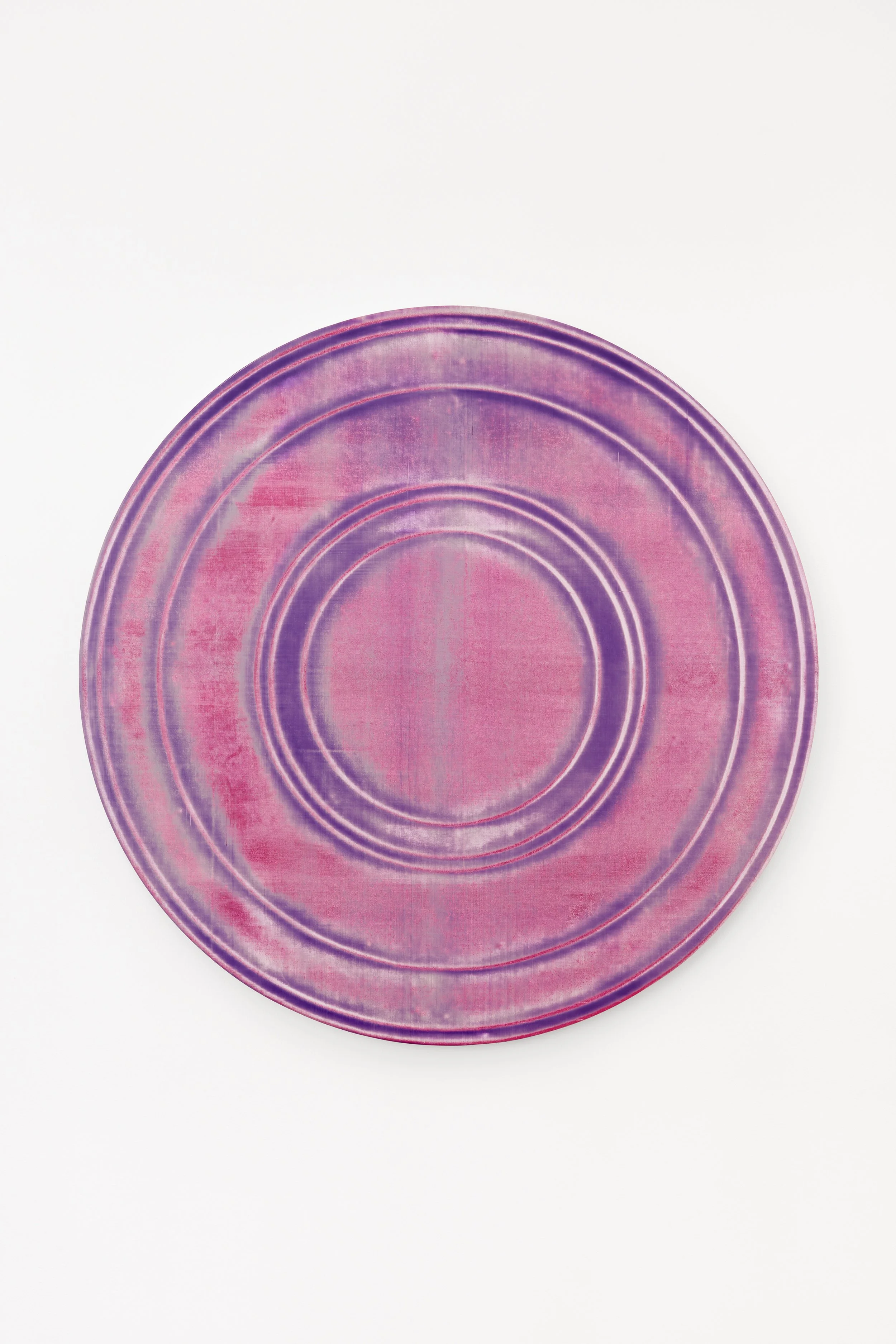
The curved lines that often appear lay out Kelly’s visual language of what the artist calls “all you can do with a line”: that is, the cross shape of bisecting straight lines and the curve of a circle. If these lines resemble the trajectory of planetary bodies, or the dimensions of architectural space, that’s intended. Kelly’s paintings deliberately recall fragments of much larger fields of geometric structure, in the vein of Piet Mondrian’s abstractions of the 1930s. It’s as though each canvas is a cross-shaped window, an aperture onto a vast dimension of intersecting line. This is perhaps what gives Kelly’s paintings their sense of projecting energy. Despite their often intimate physical size, they evoke huge scale: navigation charts, star maps, galaxies in diagram.

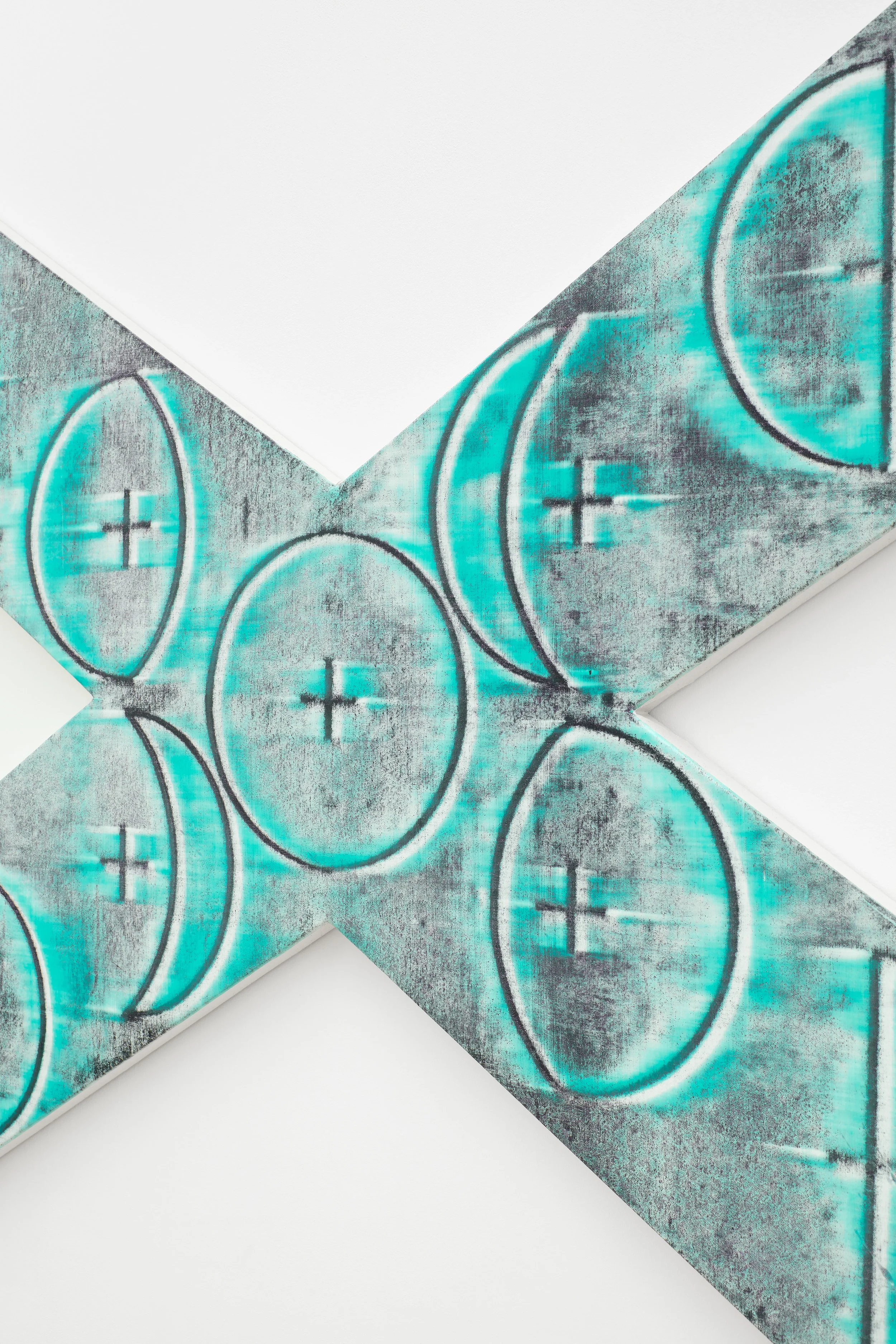
Yet always with Kelly’s work there’s a but. For all their allusions to measurement and delineation, these are defiantly physical paintings, whose effects are material rather than metaphysical. Rather than channelling a modernist frankness and austerity, they evoke instead that tradition’s later translation in practices that invite failures, inconsistencies and glitches. In common with Wade Guyton’s wilfully mishandled cover versions of early modernism – such as his use of a digital printer to reproduce Malevich-style black squares on canvas, resulting in juddering, corrupted effects – Kelly’s paintings usher in accident and distortion. Lines fall out of sync; colours streak and blur. Isn’t there something haunted about all this? Maybe that strange sense of familiarity appears not because you’ve seen it before but because you haven’t seen it for so long: the old song of modernism, echoing still.
~
~
Ben Street is an art historian with a particular interest in contemporary painting and its relationship with the art of the past. He lectures at the University of East Anglia and the University of Oxford, as well as many museums, including the National Gallery, the Royal Academy of Arts and the Wallace Collection. Street is a regular contributor to Art Review, Apollo, Gagosian Quarterly and the Times Literary Supplement. His books for general readers include How to Enjoy Art (Yale University Press), 200 Words to Help You Talk About Art (Lawrence King) and the award-winning children’s book How to Be an Art Rebel (Thames & Hudson), which has been translated into five languages.
Photography by Matt Spour Courtesy of IONE & MANN